
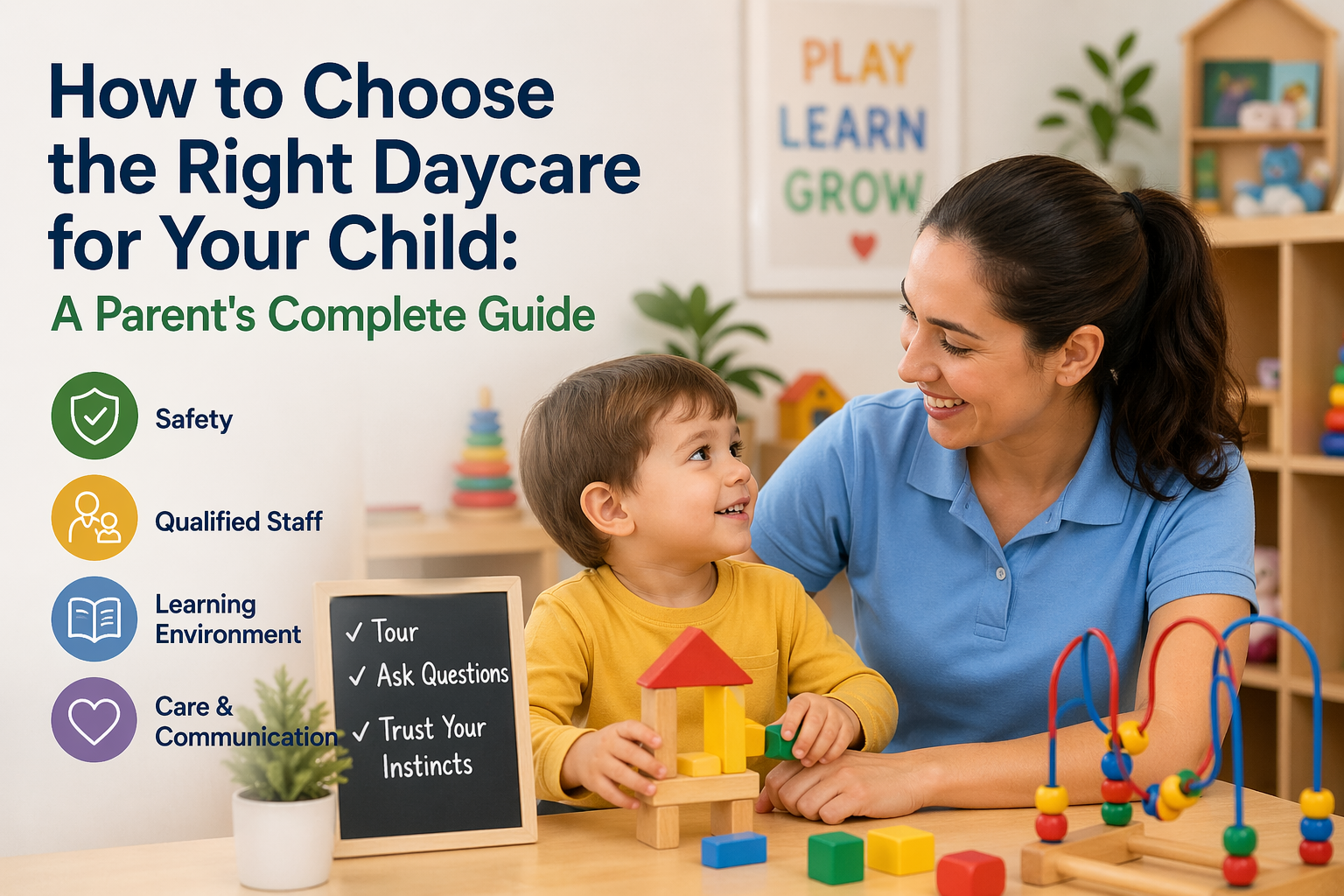
Leaving your child in someone else’s care for the first time is one of the hardest decisions a parent will ever make. Whether you’re a new mom heading back to work, a dad juggling shifts, or a family searching for a stable learning environment for your little one, the questions are endless: Is this place safe? Will my baby be happy? Are the teachers qualified? What do they feed them? How much does it really cost?
This guide was written for parents who want real answers — not sales pitches. We’ll walk you through exactly what to look for in a quality childcare center, the red flags that should make you walk away, and the questions you must ask before enrolling your child anywhere.
Why the Right Daycare Matters More Than You Think
The first five years of a child’s life are the most important for brain development. During this window, your child is building the emotional, social, and cognitive foundations that will carry them through school and life. A great childcare center doesn’t just “watch” your kids — it actively helps them grow, socialize, regulate emotions, and develop a love for learning.
That’s why the difference between an average daycare and an excellent one isn’t small. It’s life-changing. A nurturing environment with qualified teachers, proper nutrition, and individualized attention can set your child up for success for decades to come. A neglectful or chaotic one can have the opposite effect.
What Parents Should Look For in a Quality Childcare Center
Before you visit a single facility, know what “good” actually looks like. Here are the non-negotiables:
1. A Safe, Clean, and Nurturing Environment
Walk in unannounced if you can. The floors should be clean, the toys sanitized, and the air should smell fresh — not like strong cleaning chemicals or, worse, diapers. Ask about their daily sanitizing routines, handwashing protocols, and health screening procedures. At Bloom & Grow, for example, we do daily sanitizing of classrooms and high-traffic surfaces like doorknobs and light switches, and every child and staff member gets their temperature checked on arrival.
2. Qualified, Caring Teachers
Anyone can “watch kids.” A real educator teaches them. Ask about staff qualifications, certifications, and background checks. The best centers have internationally certified teachers who understand early childhood development, not just babysitters. Bilingual staff is a huge plus — children exposed to a second language during these years learn it far more naturally than adults ever will.
3. Age-Appropriate Programs
One-size-fits-all doesn’t work with children. A newborn needs something completely different than a 4-year-old. Look for a center that offers structured programs by age group:
- Infants (2+ months): Stimulation through music, tummy time, facial mimicking, and safe exploration.
- Toddlers: Encouragement of independence, coordination, and early social skills.
- Preschoolers: Participation in routines, decision-making, creativity, and self-expression.
- School age: Before and after school care with transportation, homework help, and enrichment activities.
4. Flexible Hours That Fit Real Parents’ Lives
If both parents work, a center that closes at 4:00 PM doesn’t help. Look for extended hours. Bloom & Grow, for instance, is open Monday through Friday, 6:00 AM to 6:00 PM, because we know real parents start early and finish late.
5. Transparent Communication With Parents
You should never wonder what your child did all day. Great centers send daily updates, photos, and progress notes. At pickup, the teacher should be able to tell you what your child ate, how long they napped, who they played with, and what milestones they hit. Anything less is a red flag.
6. Nutrition That Actually Meets Standards
Ask to see the menu. Meals and snacks should follow the Department of Health and USDA nutrition guidelines. Portion sizes should match the child’s age. Healthy tummies really do equal strong bodies and minds.
7. Proper Licensing and Accreditation
In Illinois, licensed childcare centers are regulated by Child Care Aware and the National Health and Safety Performance Standards. National accreditation (like NAEYC) is an extra signal of quality. Always verify — don’t take anyone’s word for it.
Home Daycare vs. Traditional Daycare: What’s the Difference?
Many parents don’t realize there’s a middle ground between a big institutional daycare and a babysitter at home: a home-based childcare center. These facilities provide services in a caregiver’s home or a private residence, offering a warmer, less rigid environment than big centers.
Research consistently shows that smaller class sizes and a home-like atmosphere lead to better psycho-emotional development. Children feel more secure, bonds form faster, and education becomes more personalized. Home daycares are still held to strict state regulations — they just feel more like an extended family than an institution.
This is the approach we’ve built our program around at Bloom & Grow — a real home-style environment with the structure, safety, and curriculum of a professional learning center.
Questions Every Parent Should Ask Before Enrolling
When you tour a facility, bring this list and don’t leave without answers:
- What are the qualifications and certifications of your teachers?
- What is the teacher-to-child ratio in each age group?
- What does a typical daily schedule look like?
- How do you handle discipline, tantrums, and conflict between children?
- What’s the sick-child policy? When do you call parents?
- What security measures do you have in place?
- How do you communicate with parents during the day?
- What meals and snacks do you serve, and who prepares them?
- Are you bilingual? Do you teach a second language?
- What’s included in tuition, and what costs extra?
If a center dodges any of these questions, that alone is your answer.
Red Flags to Walk Away From
After visiting, trust your gut. These are the warning signs that should end the conversation immediately:
- Staff who seem stressed, overwhelmed, or disengaged with the children.
- Children crying unattended or sitting in front of screens for long periods.
- Unclean bathrooms, dirty changing tables, or visibly unsafe play areas.
- No visible schedule, curriculum, or learning plan.
- Vague answers about licensing, ratios, or qualifications.
- No willingness to let you observe during operating hours.
- High staff turnover — children need consistent caregivers to build secure attachments.
Why Local Families Choose Bloom & Grow
We’re based at 3432 S 60th Ct, Cicero, IL 60804, and for years we’ve been the trusted Cicero daycare center for working families across the area. As a home-based program, we combine the warmth of a family environment with the structure of a professional learning center — and it makes a real difference in how quickly children settle in, feel safe, and start to bloom.
We specialize in infant daycare starting at 2 months old, toddler programs, preschool, and before- and after-school care for kids up to 12 years old. Our program includes music and movement, arts and crafts, science, cooking and baking, yoga, a private playground, outdoor activities, park field trips, and special excursions to the zoo, aquarium, planetarium, and farm.
Serving Families Across Two Locations
We proudly serve parents across both Cicero and the neighboring community of Berwyn. Whether you’re searching for a trusted daycare in Cicero, the best daycare in Berwyn, or quality childcare anywhere between the two, our doors are open.
- Cicero families: learn more about our Cicero location →
- Berwyn families: learn more about our Berwyn program →
Both communities have growing populations of working parents who need reliable, loving childcare — and we’ve built our programs specifically to serve them. From infant daycare in Cicero for the littlest members of your family, to infant daycare in Berwyn and structured toddler programs, we meet each child exactly where they are.
What Our Programs Offer
Infant Program (2+ months)
The first months of your baby’s life are the most critical for development. We focus on creating a safe, nurturing space with gentle stimulation through music, tummy time, facial mimicking, and verbal engagement.
Toddler Program
Toddlers are exploring, running, and discovering everything. Our toddler program encourages independence, builds self-esteem, and supports parents through milestones like sleep transitions and potty training.
Preschool Program
At this stage, children start making decisions, participating in routines, and expressing themselves creatively. Our preschool curriculum is designed to build confidence and prepare them for kindergarten.
School-Age Program
For children up to 12 years old, we offer before- and after-school care, including school bus pickup and drop-off, homework help, and enrichment activities that keep them engaged, not just occupied.
Flexible Schedules, Bilingual Teachers, and a Real Home Feel
We understand that parents don’t work 9-to-5 anymore. That’s why we’re open from 6:00 AM to 6:00 PM, Monday through Friday. Our bilingual staff gives your child the opportunity to learn a second language during the exact years their brain absorbs it most easily. And our home-based environment means smaller class sizes, more one-on-one attention, and stronger relationships with every family.
Ready to Visit? Schedule a Tour
Choosing the right childcare provider is a decision you should never rush. Come visit us, meet our teachers, see the classrooms, ask every question on your list, and watch how the children interact with their caregivers. That’s how you’ll know.
Bloom & Grow Daycare
- Address: 3432 S 60th Ct, Cicero, IL 60804
- Phone: (708) 698-0901
- Email: bloom.growdaydcare@gmail.com
- Hours: Monday–Friday, 6:00 AM – 6:00 PM
- Enrollment: bloomgrowdaycare.com/contact
Spaces are limited. Call (708) 698-0901 today to schedule your tour and give your child the caring, stimulating, and safe environment they deserve.